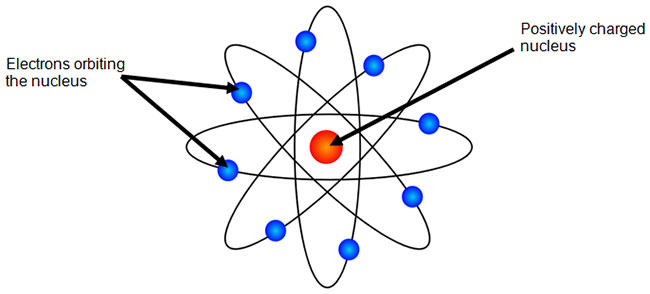
Oxidation and reduction are terms used in chemistry to describe what has happened to an element in a chemical reaction in terms fo loss or gain of electrons.
A element which has been oxidised in a chemical reaction has lost one or more electrons. An element which has been reduced in a chemical reaction had gained one or more electrons. A good example of both processes happening simultaneously would be would be the reaction of magnesium with chlorine:
In the above reaction, magnesium, as a group 2 element, loses two electrons to get a full outer shell, which the chlorine atoms each gain one of these two electrons to complete each of their outer shells. Magnesium has lost electrons and has been oxidised and chlorine had gained electrons and been reduced. As oxidation and reduction are occurring within the same reaction, we cal this type of reaction a 'redox' reaction.
A simple way to remember this is OIL RIG:
O - xidation
I - s
L - oss
R - eduction
I - s
G - ain
A common exam question surrounding oxidation and reduction is:
1. Explain in terms of electron why X has been oxidised.
Provided you know your oxidation and reduction, these questions can be easy marks. All you need to say is that 'X has been oxidised as it has lost one or more electrons'.
So there, you have it, a brief summary of oxidation and reduction!
Mg + Cl2
à MgCl2
In the above reaction, magnesium, as a group 2 element, loses two electrons to get a full outer shell, which the chlorine atoms each gain one of these two electrons to complete each of their outer shells. Magnesium has lost electrons and has been oxidised and chlorine had gained electrons and been reduced. As oxidation and reduction are occurring within the same reaction, we cal this type of reaction a 'redox' reaction.
A simple way to remember this is OIL RIG:
O - xidation
I - s
L - oss
R - eduction
I - s
G - ain
A common exam question surrounding oxidation and reduction is:
1. Explain in terms of electron why X has been oxidised.
Provided you know your oxidation and reduction, these questions can be easy marks. All you need to say is that 'X has been oxidised as it has lost one or more electrons'.
So there, you have it, a brief summary of oxidation and reduction!